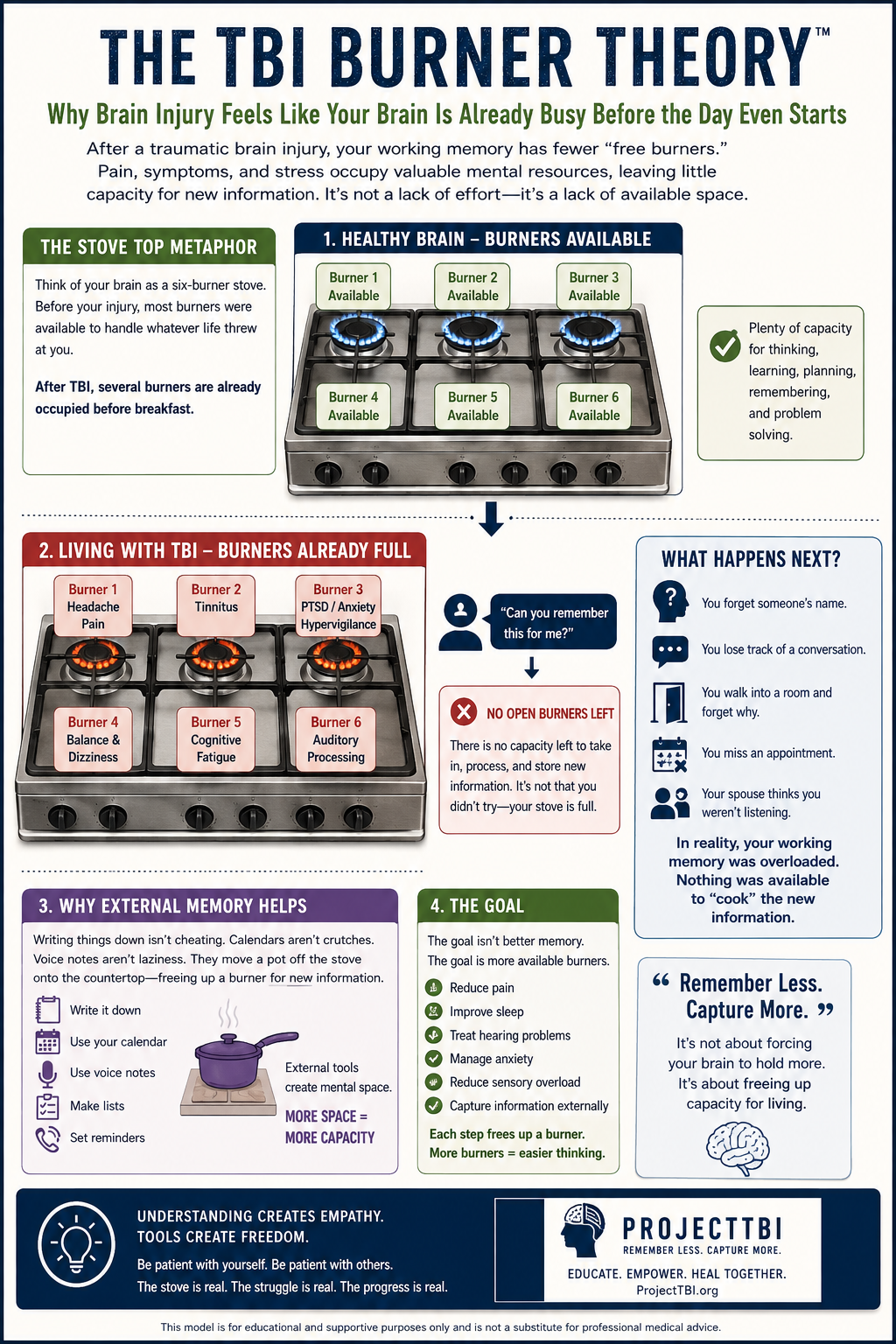
The TBI Burner Theory
People ask me all the time, "How can you write a research paper one day and then forget what you were talking about halfway through a conversation the next?" Before my brain injury, I didn't have an answer. After my brain injury, I lived it every day, but I still couldn't explain it.
Then my speech therapist handed me a simple page about working memory.
It finally clicked.
Imagine your brain is a stove with six burners. Every burner represents some of your brain's ability to think, remember, pay attention, solve problems, or simply make it through the day. Before my accident, almost every burner was available. If life threw me something unexpected, I had room to deal with it. My brain had reserve capacity.
Now, every morning starts differently. Some days I wake up with five burners available. Other days I wake up with only two. I don't get to choose.
One burner might already be occupied by a pounding headache. Another by the constant ringing in my left ear. Another is busy filtering out background noise because my brain can't separate conversations the way it used to. Add poor sleep, neck pain, stress, dizziness, or just plain cognitive fatigue, and suddenly my stove is almost full before I've even had my first cup of coffee.
That's what people don't see. They see me forget a name or lose my train of thought and assume my memory is bad. But memory isn't always the problem. Capacity is.
On a good day, I can write, plan, work, laugh, and feel almost like my old self. On a bad day, the exact same tasks can completely overwhelm me. Nothing changed about my intelligence overnight. The number of available burners did.
That's why living with TBI can feel so unpredictable. It isn't because we're inconsistent. It's because our available mental energy fluctuates. Every day. Sometimes every hour.
Once I started thinking this way, I stopped asking myself, "What's wrong with me?"
Instead I started asking, "What's using my burners today?"
That one question changed everything.
It also changed the way I use tools. I used to think writing things down meant I was failing. Now I realize my notebook isn't replacing my memory—it's protecting it. Every reminder I put in my phone, every note I scribble on paper, every calendar appointment I save is one less thing my brain has to keep on the stove. I'm not cheating. I'm creating space.
I think this is one of the hardest parts of brain injury for families to understand. They'll say, "But you remembered that yesterday," or, "You were able to do that last week."
They're right. Yesterday I had more burners. Today I don't.
Tomorrow? I honestly don't know. And that's okay.
Recovery isn't about getting all six burners back every day. It's about learning how to use the ones you have without burning yourself out. Some days you'll have room to cook a five-course meal. Other days you'll be lucky to heat up soup. Neither day defines you.
Your brain isn't lazy. You're not broken. You're simply working with a stove that changes every single day.
Once you understand that, something amazing happens.
You stop fighting your brain...
...and you start working with it.
Remember Less. Capture More.
That's not admitting defeat. It's learning how to protect your burners for the things—and the people—that matter most.